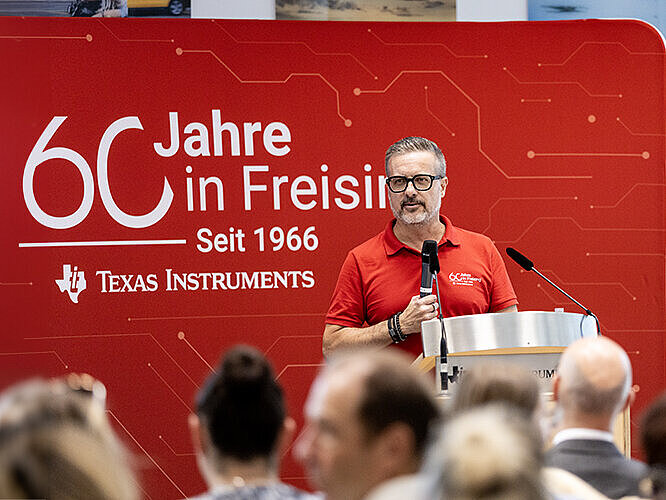
Texas Instruments is celebrating its 60th anniversary in Freising this year. What does this milestone mean for the company?
Reaching 60 years in Freising is a remarkable achievement and a moment of pride for everyone at Texas Instruments. It reflects our long-term commitment to one of the world's most innovative industrial and technology markets. Over the past six decades, we have grown alongside our customers, helping them solve engineering challenges and bring astonishing new technologies to life.
This anniversary is not only a celebration of our history but also an opportunity to recognize the people, customers, partners, and employees who have contributed to our success. Most importantly, it reinforces our confidence in the future. Germany continues to be a key market for technological innovation, and we remain committed to supporting our customers with the semiconductor solutions they need to build the next generation of products and systems.
How has Germany contributed to Texas Instruments' success over the past six decades?
Germany has played a vital role in our global success. The country is home to world-leading companies in automotive, industrial automation, energy, healthcare, and many other sectors that depend on advanced semiconductor technologies. Working closely with these customers has challenged us to innovate continuously and deliver highly reliable products that meet demanding performance standards.
Germany's strong engineering culture has also been an important factor. The close collaboration between industry, research institutions, and universities creates an environment where ideas can move quickly from concept to application. Through our engagement with customers, partners, and the broader innovation ecosystem, we have gained valuable insights that have helped shape technologies used around the world.
As an American company with a long-standing presence in Germany, how do you view the importance of the transatlantic partnership?
Transatlantic partnership is more important than ever. The United States and Germany share a strong foundation built on common values, innovation and entrepreneurship. Together, they represent two of the most important drivers of technological progress in the world, and they have one of the closest economic ties globally.
For companies like Texas Instruments, strong transatlantic connections create opportunities for investment, research collaboration, talent development, and trade. They also provide the stability and trust that global businesses need to innovate and grow. Our presence in Germany, spanning across more than six decades, demonstrates how American companies can contribute to local economies while benefiting from close cooperation with customers and partners across Europe.
Also within our company, the transatlantic partnership drives innovation through diversity of ideas and solutions.
Semiconductors are at the heart of today's digital economy. What role can transatlantic cooperation play in strengthening the semiconductor ecosystem?
Semiconductors are foundational to virtually every modern technology. Building a resilient and innovative semiconductor ecosystem requires long-term investment, skilled talent, and close collaboration between governments, industry, and academia. The United States and Germany each bring significant strengths to the table, from advanced research and design capabilities to manufacturing excellence and industrial expertise. Transatlantic cooperation can help strengthen the ecosystem in several ways. By working together, we can foster innovation, improve supply chain resilience, and create opportunities for future generations of engineers and technology leaders.
The challenges facing the semiconductor industry cannot be addressed by any one country or region alone. By working together, the United States and Europe can build a more innovative, secure, and sustainable semiconductor ecosystem that benefits customers, businesses, and society as a whole.
Looking ahead, what message would you like to share with members of the American Chamber of Commerce in Germany?
Our 60th anniversary in Freising is a testament to the enduring value of transatlantic business relationships. For more than six decades, we have benefited from the openness, innovation, and entrepreneurial spirit that define both Germany and the United States. As we look to the future, I believe the opportunities for innovation and collaboration are greater than ever.
The pace of technological change continues to accelerate, creating exciting possibilities in areas such as electrification, industrial automation, artificial intelligence, renewable energy, and connected infrastructure. Realizing these opportunities will require strong partnerships between industry, government, academia, and organizations such as AmCham Germany.
My message to fellow members is simple: continue investing in collaboration, innovation, and people. By strengthening the bridges between the United States and Germany, we can help drive economic growth, technological leadership, and long-term prosperity on both sides of the Atlantic. Texas Instruments looks forward to being part of that journey for many years to come.
Please note: This piece reflects the perspective of an AmCham Germany member company. As a membership-driven organization, AmCham Germany values and supports the exchange of wide-range viewpoints from its community.